
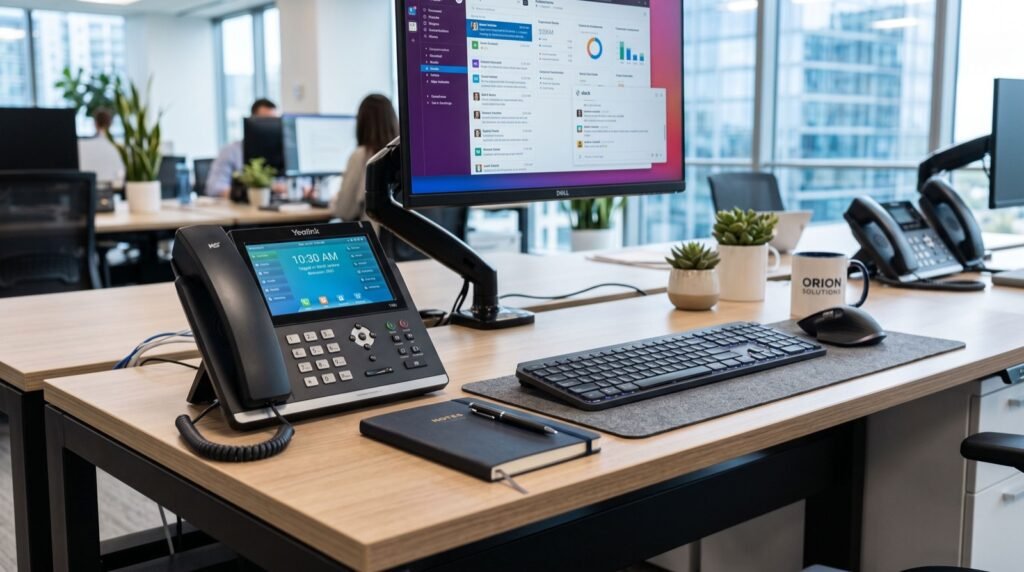
For decades, businesses ran on analog phone lines: copper wires, a bulky PBX cabinet, and a bill that never seemed to shrink. That model is fading fast. In 2026, the question is no longer whether to move to VoIP, but how to do it without disrupting the calls that keep your business alive. Understanding the difference between SIP and analog is the first step, and it is simpler than most vendors make it sound.
This article breaks down SIP versus analog in plain language, shows what you actually gain by switching, and lays out a migration path that avoids downtime. Along the way we will look at the kind of modern handset that makes the upgrade worth it, and point you to a solid source for the Best IP Phones in Karachi so your team gets reliable hardware from the start.
SIP vs analog: what is really different
An analog phone converts your voice into an electrical signal that travels down a dedicated copper pair to the exchange. One line equals one call. Adding capacity means adding physical lines, and every advanced feature is either impossible or costs extra.
A SIP phone works completely differently. It digitises your voice, splits it into packets, and sends those packets over the same internet connection your computers use. SIP, the Session Initiation Protocol defined by the IETF, handles the signalling that rings the phone and connects the call. Because the whole conversation is data, features like conferencing, call routing, and voicemail become software settings rather than hardware you have to buy.
Is analog completely obsolete now?
Not entirely, but it is heading that way. Many telecom operators worldwide are retiring their old copper networks and pushing customers toward IP. Holding onto analog often means paying premium rates for a service with a shrinking future. For any business planning more than a year ahead, SIP is the safer long-term bet.
The concrete benefits of switching to VoIP
The advantages of a SIP-based system go well beyond a lower phone bill, though the savings are real. Here is what changes for a typical office.
- Lower call costs: Internal calls between offices become free, and long-distance rates drop sharply over IP.
- Effortless scaling: Add or remove extensions in software; no engineer visit, no new cabling.
- Rich features included: Auto-attendant, call queues, voicemail-to-email, and call recording ship as standard.
- Location freedom: A SIP extension can ring at head office, a branch, or a home desk using the same number.
- Clearer audio: HD voice codecs deliver noticeably crisper calls than narrowband analog lines.
- Unified management: One web dashboard controls every phone instead of a locked metal PBX box.
Analog vs SIP at a glance
A quick side-by-side makes the trade-offs obvious. Here is how the two approaches compare on the points buyers care about most.
| Factor | Analog phone line | SIP / VoIP phone |
|---|---|---|
| Call transport | Copper wire, one line per call | Internet packets, many calls per link |
| Adding an extension | New physical line required | Software change in minutes |
| Advanced features | Limited or costly add-ons | Built in as standard |
| Call quality | Narrowband only | HD wideband audio |
| Ongoing cost | High per-line charges | Lower, usage-based pricing |
| Remote working | Tied to the building | Works from anywhere |
A no-downtime migration plan
The fear that stops businesses switching is losing calls during the changeover. With a phased plan, that never happens. Follow these steps and the transition stays invisible to your customers.
- Audit your current usage. Count active lines, note peak call times, and list the numbers you must keep.
- Choose a SIP provider. Pick a trunk or cloud PBX that supports number porting so you keep your existing digits.
- Check your internet and network. Confirm bandwidth headroom and enable QoS so voice traffic gets priority.
- Run the two systems in parallel. Deploy IP phones alongside analog for a short overlap while staff adjust.
- Port your numbers, then retire copper. Once calls flow cleanly over SIP, transfer the numbers and cancel the old lines.
Getting the hardware and configuration right is where an reputable service experts team earns its keep. Provisioning phones, setting QoS, and porting numbers all go smoother with people who have done it before.
Choosing the right handset for the switch
A migration is only as good as the phones on the desks. This is a strong moment to standardise on a modern business handset that shows off what SIP can do. The Fanvil V61G Prime Business Phone is a good example: it pairs a sharp colour display with gigabit ports, Wi-Fi and Bluetooth options, and generous SIP line support, so staff feel the upgrade the moment they pick it up.
An original tip: keep one analog fallback
Here is advice most migration guides skip. Even after you go fully SIP, keep a single analog line or an ATA (analog telephone adapter) connected to a basic phone for emergencies. If your internet ever drops, that one line keeps a critical number reachable. It costs little and turns a potential outage into a minor inconvenience. Smart businesses treat it as cheap insurance rather than wasted spend. You can verify SIP’s role in call signalling in the official IETF RFC 3261 document.
Frequently Asked Questions
Will I lose my current phone number if I switch to VoIP?
No. Number porting lets you carry your existing numbers to a SIP provider. The process takes a few business days, and you can keep both systems live until the port completes, so no call is ever missed.
Do SIP phones need special internet?
No special line is required, just a stable connection with enough upload bandwidth for your call volume. Enabling Quality of Service on your router to prioritise voice traffic ensures calls stay clear even when the network is busy with other data.
Can I keep some analog phones during the transition?
Yes, and it is a smart move. Running analog and SIP side by side for a short overlap lets staff learn the new handsets without pressure. An analog telephone adapter can even bridge older devices into your new IP system if needed.
How much can a small business save by moving to SIP?
Savings vary, but many businesses cut their monthly phone costs significantly once they drop per-line rentals and reduce long-distance charges. Internal calls between sites become free, and the removal of maintenance on old PBX hardware adds further savings over time.
Ready to move beyond copper
The gap between SIP and analog is no longer close. VoIP delivers lower costs, richer features, and the flexibility to work from anywhere, while analog offers little more than familiarity and a rising bill. With a phased migration plan and quality handsets like the Fanvil V61G, you can switch without a single dropped call. If your business is ready to leave copper behind in 2026, reach out to a trusted local IP phone supplier and start planning a smooth, downtime-free move today.